
In today’s fast-paced digital world, organizations are constantly looking for ways to deliver software faster without compromising on security. This is where DevSecOps comes into play. But what exactly is DevSecOps, and why is it so important? Let’s dive in.
What is DevSecOps?
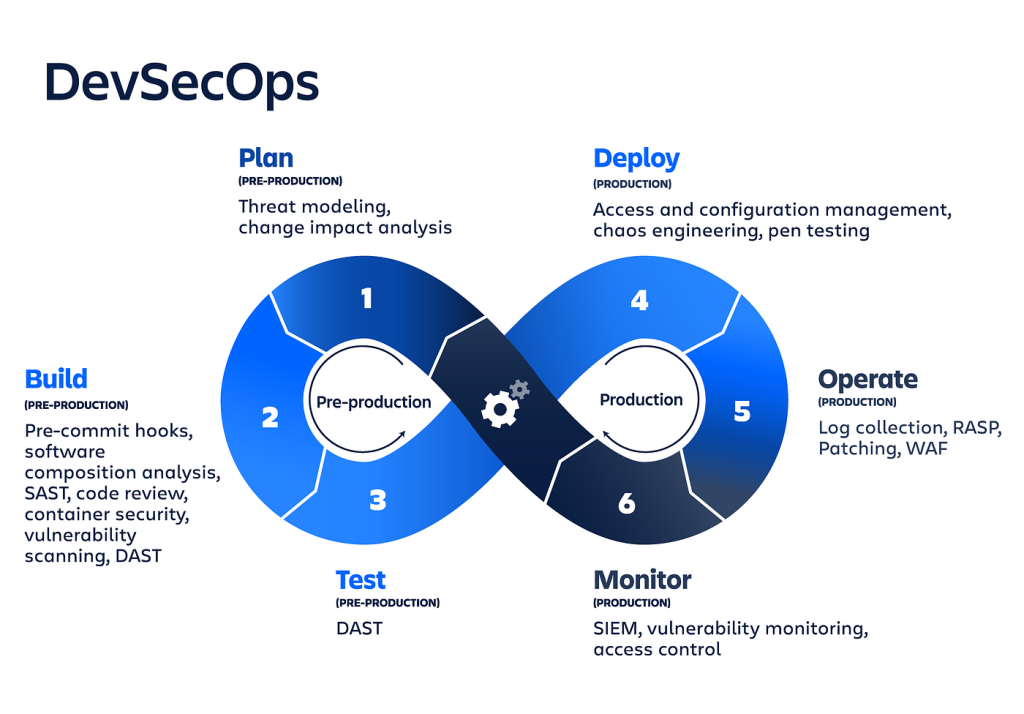
DevSecOps stands for Development, Security, and Operations. It’s an approach that integrates security practices into every phase of the software development lifecycle, from initial design through integration, testing, deployment, and delivery.
Traditionally, security was added at the end of the development process. However, this method often led to delays, vulnerabilities, and costly fixes. DevSecOps shifts the security focus to the beginning, making it a shared responsibility across development, security, and operations teams.
In simple terms, DevSecOps is about baking security into your product from day one, rather than sprinkling it on top at the end.
Why DevSecOps Matters
1. Security at Speed
Modern businesses need to innovate rapidly. DevSecOps allows teams to move quickly while maintaining robust security standards. It ensures that security checks and measures don’t slow down development processes.
2. Early Detection of Vulnerabilities
By integrating automated security tools early in the pipeline, vulnerabilities are detected and fixed long before they can become serious problems. This reduces the risk of data breaches, downtime, and regulatory penalties.
3. Cost Efficiency
Fixing security issues early is much cheaper than patching them post-release. DevSecOps helps organizations save costs associated with late-stage fixes and breach recovery.
4. Compliance Made Easier
In industries with strict regulations (like finance and healthcare), DevSecOps can help meet compliance requirements more efficiently by embedding audits, reporting, and governance into the workflow.
5. Improved Collaboration
DevSecOps encourages collaboration between development, operations, and security teams. It breaks down silos, creating a culture of shared responsibility and continuous improvement.
Key Principles of DevSecOps
- Automation: Integrate security tools into the CI/CD pipeline to automate testing, scanning, and compliance checks.
- Collaboration: Foster open communication between developers, operations staff, and security teams.
- Continuous Monitoring: Keep an eye on systems and applications post-deployment for any emerging threats.
- Security as Code: Treat security policies and controls as code that can be versioned, reviewed, and tested.
Final Thoughts
In a world where cyber threats are evolving daily, incorporating security into your development process isn’t just a nice-to-have — it’s essential. DevSecOps helps you build safer, faster, and more reliable software by making security a priority from the start.
Adopting DevSecOps practices can seem daunting at first, but the long-term benefits — stronger security posture, faster delivery, and reduced costs — make it well worth the effort.
Ready to integrate DevSecOps into your workflow? Start today, and build a safer future for your software projects!